 Home
Home Index
Index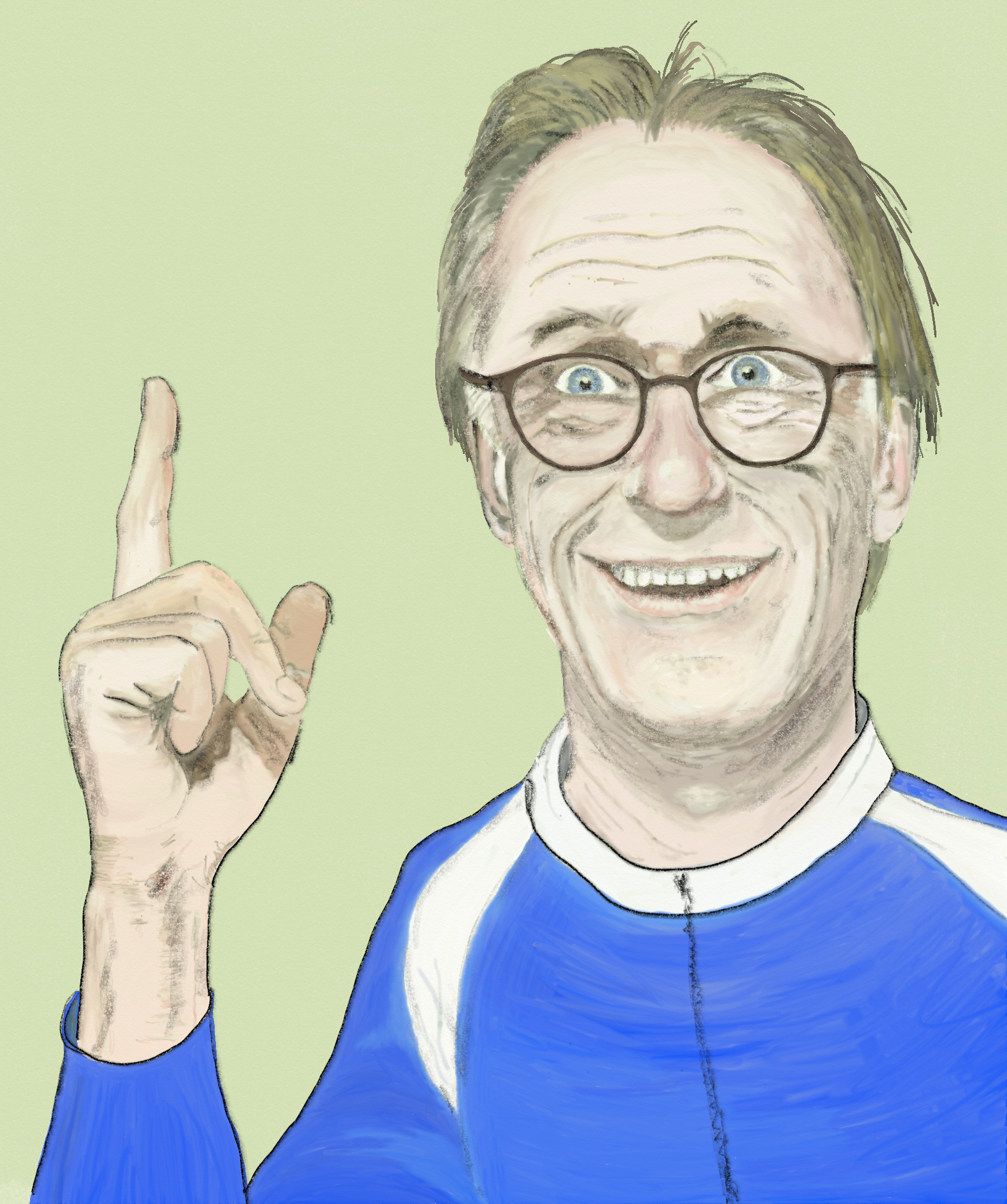
The Person
Conversation 14, Socrates Worldview 10/22
SOCRATES. Tell me now, what would you do if you wanted to know what Socrates would say in response to a certain question? Before you answer, let’s dispose of a couple of useless possibilities. Adeimantus, would you go back to quantum mechanics and solve the Schrodinger equation governing Socrates?
ADEIMANTUS. Obviously not, Socrates. It would be far too complex. Even if we knew all the physical factors pertaining to Socrates, such as your complete DNA profile, we could never solve the equation, and if we could, we probably wouldn’t be able to interpret the answer in any meaningful way. We couldn’t even do it for an ant. Even if we knew every detail of the nervous system of an ant, we probably could not predict its behaviour with any certainty.
S. Quite so, Adeimantus. A bottom-up approach from basic science is not going to work. What about you, Critobulus? Would you go to the social scientists and ask them what a fellow like me would do?
CRITOBULUS. I’m sure they would have some interesting things to say about the likely behaviour of a person like you, Socrates.
S. How would you describe my person to these social scientists, Critobulus?
C. I would tell them your age, gender, ethnic background, religious affiliations, and so on.
S. In other words, my ‘identity’, to use the modern parlance. What sort of answer do you think they would give?
C. They would say that 90% of people like you behave in such and such a way.
S. In other words, they would give you statistics based on your crude characterisation of me. These statistics might be of some use in planning your political election strategy, but they really give you no idea what I, Socrates the Younger, would do or say on this particular occasion. They would probably add the gratuitous advice that I am someone who is not in tune with the ‘zeitgeist’ and not a desirable person to associate with. What would be your approach to this problem, Euthydemus?
E. I would ask someone who knows you personally, perhaps your wife Perlinte who must know you as well as anyone does. Based on their knowledge of your personality and your past behaviour, they would make the best guess of your likely behaviour on this occasion.
S. I like your answer, Euthydemus. You have identified ‘the person’ as the central idea that we must engage with when we talk about human behaviour and the experience of human life. Now, what do you think I mean by ‘the person’?
E. You already know that I identify ‘the person’ with that person’s immortal soul. For a divine person, like God, we would be talking about the spirit of that person.
S. Quite so, Euthydemus, that is what I expected you to say. Rest assured that I do not dismiss the possibility of some sort of immaterial soul which is the essence of the person, but I want to explore how far a scientific materialist can progress on the question of what ‘the person’ is. Adeimantus, pretend that you are a scientific materialist. You see Socrates sitting before you. What is it that characterises what you see as Socrates? Suppose you have all the scientific instruments in the world at your disposal.
A. I suppose I would begin by taking your DNA profile. That is unique to you.
S. Imagine, Adeimantus, that you have never met me and are tasked with finding me in a crowd, equipped only with a printout of my DNA profile. You will not do as well as Euthydemus here, who has only known me for a short while but who would recognise me instantly. Anyway, we have already decided that knowledge of my DNA would not allow you predict my behaviour or describe my character. What else could you do?
A. I could take your fingerprints. Again, they are unique to you.
S. Yes, and almost as useless as DNA for finding someone in a crowd, and just as useless for predicting my behaviour. And don’t even mention the possibility of palm reading!
A. Of course, I would not propose palm reading, Socrates! I could take your blood type.
S. I have a common blood type which I share with about half the population. You are no closer to saying what makes Socrates Socrates.
A. If I were a policeman looking for you, I would describe your appearance. You have a big nose and a receding hairline.
S. You are too kind, Adeimantus, but many people have a big nose and receding hair.
A. Whenever I see you, you are wearing a blue lycra jersey.
S. Anyone could impersonate me by wearing a blue lycra jersey, although I admit that not many would look as good in it as I do.
C. There is your imperious manner, Socrates.
S. I admit to occasionally coming across as imperious, Critobulus, but those who know me better know that I am really humble of heart. What do you say, Euthydemus?
E. I don’t yet know you well enough to decide whether you are imperious or humble, Socrates, but I would say that it is the combination of all your characteristics: physical appearance, attire, mannerisms of speech and movement, and what we know of your history that together define your person.
S. Well said, Euthydemus. I am a veritable symphony of attributes playing in combination to make up the tune called Socrates! Have you noticed that science wants to analyse things by breaking them down into their constituent parts, understanding the parts, and then building the thing up again. This works for many things from an atom up to the weather, but it doesn’t work for ‘the person.’ When you take the microscope to Socrates and zoom in, Socrates disappears. All you see are atoms swarming around, and none of them have the name ‘Socrates’ written on them. No, to see Socrates you have to stand back and take in the full vista, preferably over a period of time.
C. What tune would you liken yourself to, Socrates?
S. I’m glad you picked up on my musical analogy, Critobulus. I think it bears some elaboration. The human body is the instrument, and the ‘person’ is the music. The instrument is a physical thing, and the music is an immaterial thing. Science can analyse the instrument and calculate its tonal properties to give some idea of what it will sound like, but it can’t tell you what the tune will be. The instrument will be good for some tunes and not others. You would not play a violin concerto on a tuba and a violin would not be as good as a tuba for supplying the rhythm for a march.
A. You are saying the physical body, including the brain and consciousness, is like a musical instrument, but it’s not the song?
S. That’s right, Adeimantus. To give another analogy, you could say that the physical body including the brain and consciousness is like a fabric, but it’s not the garment. The fabric is a material thing, but the garment needs a design, an immaterial thing, literally. The same design could be made in various fabrics.
C. Some fabrics might suit the design better than others.
S. True, Critobulus. Now, when it comes to living, it is the immaterial things that matter most: the song, the garment, and the person.
C. So, if the person is the music played on the instrument of the body, then when the body ails, the music suffers and we say of the person, ’he is not himself’, or ‘he is out of tune with himself’.
S. Very good, Critobulus! Or we could say, ‘he is not on song today’.
C. And if a person is a song, who would the player be in your analogy?
S. It doesn’t pay to push an analogy too far, Critobulus, but in this case I think it can accommodate your question. The human body is a self-playing instrument. It is a ‘smart’ instrument with preprogramed circuitry, as we discussed yesterday. It therefore has a tendency to want to play a certain tune, but the accidents of its history, including its own reaction to the sounds it makes, will cause the tune to vary. Although the tune may vary, it will always have characteristics that make it recognisable as belonging to that instrument. But let me take the analogy in another direction. Have you noticed that a piece of music, a tune, has an existence separate from the instrument on which it was first composed? One person sings a catchy tune and soon many people are going around singing or whistling it. The tune can be written down on a score, or it can be recorded in digital code as a sequence of ones and zeros. It can be played long after the original instrument has gone.
E. It sounds like you are saying ‘the person’ is a spirit.
S. I am heading in that direction, but I would like to use a more neutral term, Euthydemus. I would prefer to say ‘the person’ is a concept.
A. What do you mean when you say a person is a concept?
S. Thank you for asking, Adeimantus. Of course, philosophers use the word ‘concept’ to mean specific and technical things. I will use it in the everyday sense. I like this definition from the Macquarie dictionary (The Little Macquarie Dictionary, 1993): ‘an idea that includes all that is associated with a word or other symbol.’ Usually when we are talking about a person, the word in question is that person’s name, although it may a descriptor that we all understand, like ‘the baby’, or ‘that chap who always sits by the door’.
A. So for me, ‘Socrates’ is the idea I have of you, your name, and all the things I observe about you and remember about you?
S. That’s so, Adeimantus. Another definition I like is that a concept is a mental representation of something (Margolis & Laurence, 2022). The concept of a person is, I think, the representation of that person in the mental model our conscious mind maintains of the world, in what I referred to yesterday as the self-awareness process in our brain.
A. Would you equate one’s worldview with this self-awareness mental model?
S. Yes, Adeimantus, I would. I would say that is where the worldview resides. But I would add that the processing of the mental model is largely unconscious and only comes to the surface when you interrogate it, that is, focus your attention on it and think about it. It would be quite possible for a person to think that their worldview is one thing and for it actually, unconsciously, to be another thing. Since the mental model of the world is what governs our planning and influences our decision making, as we discussed yesterday, a person can say one thing and do another.
C. So you, Socrates, could maintain that you are rational, but act irrationally?
S. Whether anyone can really act rationally, even though they think they do, is a question we might explore further, Critobulus. I was thinking of an example where a person, in their worldview, thinks it is a good thing to be generous to the needy, but they never donate to charity because their unconscious mental model tells them that no-one is more deserving than they are themselves. But we are digressing. Let us get back to the person as a concept. The central concept in anyone’s mental model of the world is the person called ‘I’. We are programmed that way. With the concept ‘I’ is associated everything I experience, both internally and externally, and everything I am conscious of thinking. This mental model also includes concepts for all the other people I know and even imaginary people. Authors, I believe, sometimes think about their created characters so much that they come to seem to them like real people.
E. How is this ‘conceptual person’ like a spirit?
S. A concept is not a material thing. The conceptual person is not subject to the laws of physics. It can go wither it will in space or time as I choose to imagine it. But there are reality checks. We know that a body must at some time be associated with the concept if it represents a real person, and the body is subject to the laws of physics, but the ‘person’ is not. This is where many materialists and atheists go wrong when they talk about people and society. They think that the person is the body and somehow subject to natural laws, which they equate with reason. Because they can’t or won’t concede that the person is a concept, an immaterial thing like a spirit, if not actually a spirit, they bind it to a false logic of natural law.
C. You are being very mysterious, Socrates.
S. I concede that, Critobulus. I will give concrete examples in our coming discussions.
E. How, then, is a conceptual person different from a spirit?
S. We have not defined exactly what we mean by ‘spirit,’ so I cannot give a precise answer. If we are talking about how we might experience a spirit, or the action of a spirit, compared with our mental experience of a conceptual person, then I would say they are indistinguishable. I say this because I think that our mental model of a spirit is an analogy of our mental model of a person: it is based on our idea of the conceptual person. If, on the other hand, we are talking metaphysics, then our common understanding of spirit differs from a concept in important ways. A spirit, we suppose, is a thing that has an objective, independent, existence in its own right. There is a question, which we might return to another time, about whether a spirit is a natural or supernatural thing, whatever that may mean. The conceptual person does not have an existence independent of some mind in which it is a mental representation of someone.
A. You are saying that if there are no people left in the world, then all concepts, including concepts of people, are gone too? If no-one remembers you, you are gone for good?
S. Music needs someone to sing or play it. Music can be encoded in some medium like a recording, and in principle it could still be played, or reconstructed, after all people are gone. But the human is too complicated to be encoded in this way, although materialists who dream of eternal life have considered the possibility. We might one day be able to clone a living woolly mammoth from a scrap of fossil DNA, and maybe do the same with a human, but the resurrected person would not be the same person who lived before. The formative experiences that shape the new conceptual person would be different.
E. The conceptual person could survive eternally in the mind of God.
S. Certainly, if there is a God and his mind holds a concept of a person, that conceptual person would survive the death of its body and of all other people. Christian dogma likes to flesh out this notion with the resurrection of the body, but that is more a rejection of the old Jewish idea of nameless shades inhabiting Hades than an insistence of the reconstruction of the material body. One way or another, God would remember his faithful servants.
E. So, in your worldview, a person has at least some possibility of eternal life?
S. I think that deep down, the human psyche finds it impossible to conceive of the non-existence of the ‘I’. Although we all learn the sad news, once we reach a certain age, that our physical body will die, we cannot really imagine a world without our ‘I’ in it. If we try to imagine such a world, we are always conscious of our ‘I’ there looking at it. There was once a man called Bill Hayden who was a politician and who served as Governor General of this country. I saw him interviewed. He said he was an atheist and did not believe in life after death. He hoped to be buried on a hillside overlooking the Pacific Ocean when he died. It was clear that he imagined himself there, looking down on his grave and enjoying the view. I thought to myself, ‘That man is a believer, deep down.’ I was not surprised to learn that he converted, or reverted, to Catholicism before he died.
C. I think I can imagine a time when I don’t exist.
S. I think, Critobulus, that you imagine a time when you exist in a state of imagining that you don’t exist!
A. Where has this discussion got us, Socrates?
S. I hope we have established that ‘the person’ is a concept. I can now repeat what I said before, but this time using the idea of concepts: when it comes to living, it is the conceptual things that matter most: the song, the garment, and the person.
A. And the person as a concept exists independently of the body?
S. The concept of a real person is associated with the physical body of the person, but it can exist in the minds of other people before the person is born and after they die. This insight is of the utmost importance for any consideration of morality and society. In respect of how we experience it, a conceptual person is indistinguishable from a spirit. This brings us to religion, which must be our next topic.
E. I await with trepidation. I thought I knew all about religion.
C. Euthydemus, I suspect you have almost as much to learn about religion as Critobulus. See you tomorrow!
References
Margolis, E., & Laurence, S. (2022). Concepts. In E. N. Zalta, & U. Nodelman (Eds.), The Stanford Encyclopedia of Philosophy (Fall 2022 ed.). Metaphysics Research Lab, Stanford University. Retrieved January 5, 2023, from https://plato.stanford.edu/archives/fall2022/entries/concepts
The Little Macquarie Dictionary. (1993). Macquarie University, NSW, Australia: The Macquarie Library.